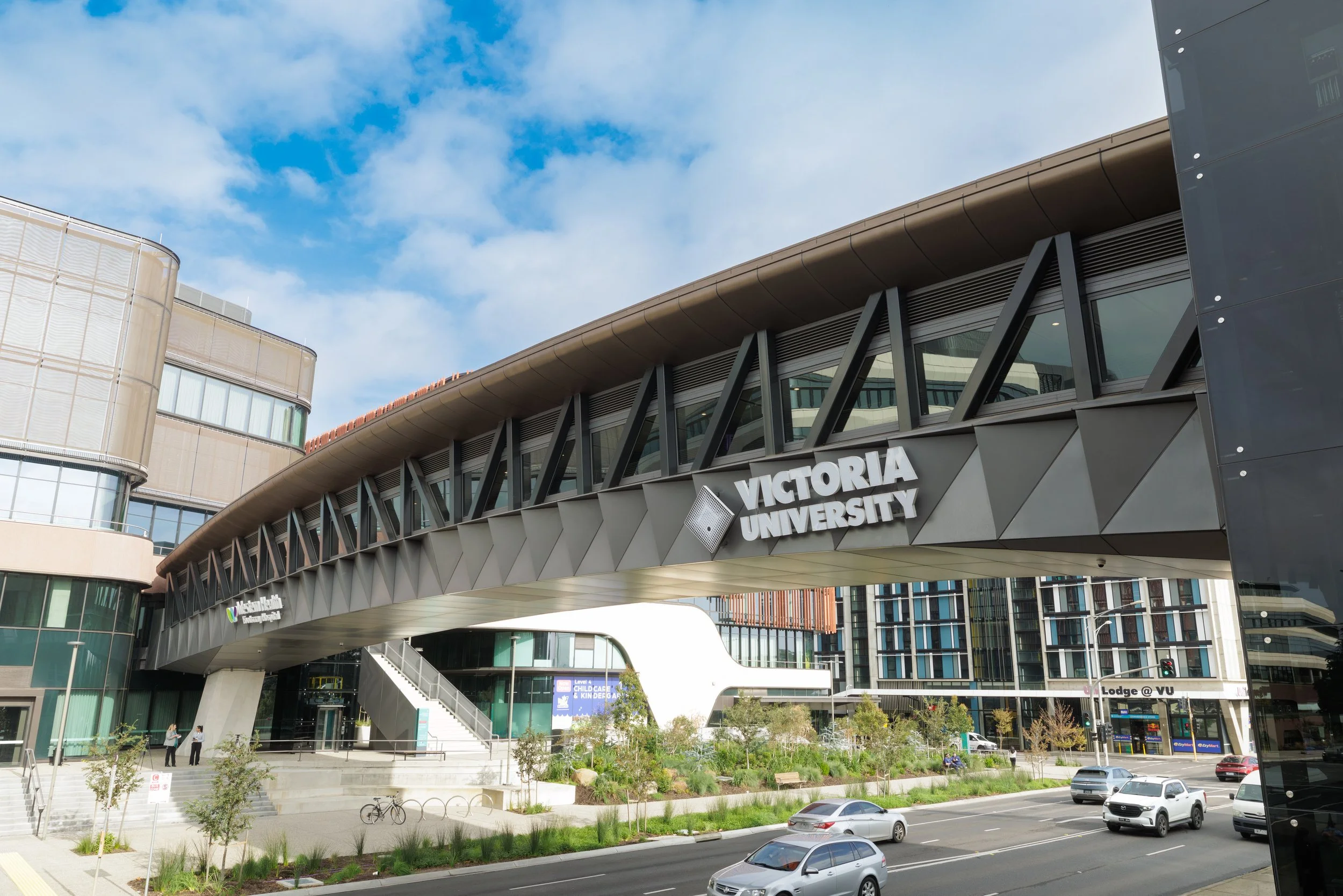
Director, Emma Whiffen, recently collaborated with the Victoria University team and MaryBeth DiDonna from Lab Design News on an article exploring the new Victoria University Research Building (VURB) at the New Footscray Hospital.
Moving Science Closer to Patients shares the thinking behind the facility, including its multidisciplinary research model, specialist environments and focus on creating a welcoming experience for research participants.
Rather than repeat that story here, we wanted to share another perspective on the project: what it takes to represent a client and turn an ambitious vision for research into a facility that can be planned, designed and delivered.
Victoria University’s ambition extended beyond constructing a new research building. VURB needed to support research across a wide range of health disciplines, create stronger connections with the New Footscray Hospital and make it easier for researchers, clinicians, students and the community to work together. These objectives provided a strong foundation, but they still needed to be translated into a clear and deliverable project brief.
As project manager for Victoria University, Emma's role was to help connect the University’s strategic objectives with the many operational, technical and user decisions being made throughout the project. That meant understanding what Victoria University wanted the building to achieve, listening closely to the people who would use it and helping the broader project team maintain that intent as the design developed.
Research projects bring together stakeholders with highly specialised knowledge. Each research group understands its own work, equipment and operating requirements in detail, but the facility must ultimately function as one connected environment. The role of the client-side project manager is not simply to collect those requirements. It is to help the client test, prioritise and translate them into decisions that can be understood and acted on by architects, engineers, contractors and other advisers.
At VURB, this involved working with researchers to understand their workflows and future needs, while keeping sight of the University’s broader objectives, budget, program and operational requirements. Not every request could be considered in isolation. Decisions needed to take account of how spaces would be shared, how different users would move through the building and how one technical requirement might affect the wider design. This is where experienced project and design management adds real value. It creates a structured path from consultation to decision-making, without losing the knowledge and intent behind the original request.
A project brief is not something that is completed and then set aside. It needs to remain active throughout design and delivery. Complex projects inevitably encounter competing priorities. User expectations, technical constraints, approvals, budget and program all need to be considered, often at the same time.
The client needs clear advice on what a proposed change means, what other parts of the project it may affect and whether it still supports the intended operation of the facility. For VURB, this required ongoing coordination between Victoria University, researchers and the consultant team. It also required a detailed understanding of the relationship between design decisions, specialist equipment and the way research activities would operate within the completed building. The objective was not to advocate for every individual request but to help Victoria University make informed decisions that protected the overall purpose and performance of the facility.
Emma's background as a qualified architect, design manager and project manager has shaped the approach. Design literacy helps when discussing spatial planning, technical coordination and the implications of changing a brief. Delivery experience provides an understanding of cost, constructability, procurement and the point at which decisions need to be made.
Bringing these perspectives together is particularly important for research infrastructure, where operational details can have significant architectural, structural and services implications. The most effective client-side advice connects these considerations. It helps the client understand not only whether an idea is desirable, but what will be required to make it work.
VURB is now supporting research across nutrition, physiotherapy, biomedicine, psychology, exercise physiology, social work and health-related artificial intelligence. For Victoria University, the result is a facility that strengthens its connection with the hospital, supports greater collaboration across research disciplines and creates new opportunities for community participation.
For us, the project reinforces a simple principle: successful infrastructure begins with a clear understanding of the client’s purpose. The role of the project manager is to keep that purpose visible, help the client navigate complexity and ensure that the many decisions made along the way continue to support the people who will ultimately use the facility.
Read the Lab Design News feature, Moving Science Closer to Patients, for more on the planning and design of the Victoria University Research Building.